The Cryptopians Review
A Brief Review of Laura Shin's New Book

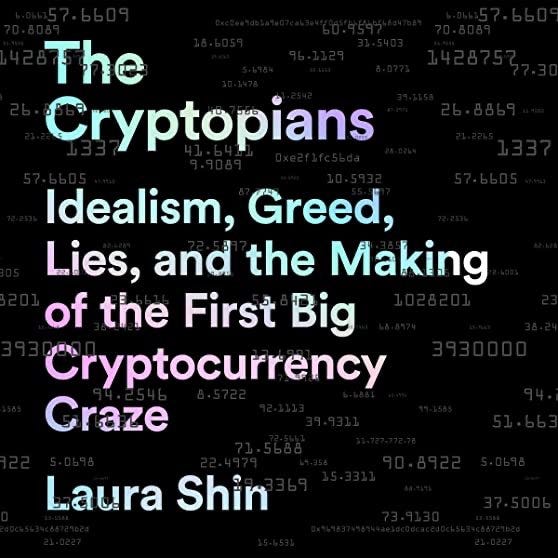
Laura Shin is the host of popular crypto podcast Unchained. For years she has been covering crypto news and conducting interviews with some of the biggest names in the industry. Now, she has written a book about the creation of Ethereum and the role that smart contracts played in the ICO frenzy that brought crypto the mainstream.
This is a must read for anybody who is interested in the history of crypto. Until now there was no easy means for people to discover the stories behind the creation of a revolutionary technology because its decentralized nature meant that most of what was occurring happened digitally. Unlike the creation of companies like Apple or Facebook, there is no one location or group responsible for launching and maintain a business and ecosystem. Cryptocurrencies allow for people worldwide to work remotely and comment on the internet, never needing to be in the same location or ever actually meet. It makes documenting difficult, if not impossible. But Laura put in the effort to compile numerous reddit, 4chan, and other online post in one location. And she also made the decision to focus on the story of Ethereum, the cryptocurrency that brought smart contracts into existence and which did have a team to disclose the history of the project.
Although there is some disputes about the extent of their contributions and who truly deserves credit, there are five people who are generally acknowledged as the creators of Ethereum: Vitalik Buterin, Charles Hoskinson, Gavin Wood, Anthony Di Lorio, and Joseph Lubin. About the first third of the book is dedicated to the tale of how these five people came together - and how their internal conflicts almost derailed the project before it ever launched. In 2022, when all these people are millionaires who revered by some members of the community as gods, its easy to forget they were once normal people desperate to launch a project. We get to hear about their relationships, how responsibilities were divided, and ultimately why these five did not stay together for a long time.
But the bulk of the book is about the DAO Attack and Ethereum’s contributions to mainstream adoption with the ICO craze. These two parts were my favorite because of my love of the idea of decentralization. The DAO and the ICO are perfect case studies about the behavior of human beings and the various paradigms that can result from a single incident. Permission-less systems allow people to use the network any way they see fit, so long as it complies with the code. This means that a person who wants to steal money is as free to use the network as somebody who wants to build a great project. Some people built rug pulls to line their pockets, while other people built products, like MEW, to make crypto accessible to the mainstream. And the Ethereum community even split the network into two separate blockchains when they couldn’t reach an agreement about the solution to the DAO hack. It was exciting to read about the various ways that individuals, for good and bad, used the network as they saw fit.
The Cryptopians is a great reminder that no project becomes successful without overcoming adversity. Before Ethereum could even launch to the public they had to solve inner turmoil, regulatory problems, and financial issues. People left the project, people were forced from the project, and people wrestled for control of the project. All the while these group of twenty-something and thirty-somethings were dealing with technical issues and bugs that threatened to kill confidence in their project and leave them in personal financial ruin. But in spite of the odds that chose to continue pushing forward and overcome the adversity that they faced.
I do have a major complaint about how Laura covers the founding of Ethereum. She seems(and I believe her Twitter account verifies this) to have a personal issue with some founding members, particularly Charles. Too often I felt that their contributions were downplayed to make them appear to be an insignificant part of the history, whether it was questioning the quality of their work or the purpose of it. Or she focuses on the fact that they may not be the most liked person because they did not have the personality and demeanor of Mr. Rogers. The attempt to disparage these members as either incompetent or despicable is odd because of their success outside of Ethereum. Both Gavin and Charles have created thriving competitors to Ethereum that are top ten coins by market cap at the time of writing.
Conversely there is an attempt to deify Vitalik that seems creepy. Whenever controversy arises, there is a deliberate attempt to excuse Vitalik’s involvement, gloss over his involvement, or lead readers to believe that he was unaware of a problem. Nobody is interested in pretending that a Nineteen year old who created a cryptocurrency with strangers from various messaging boards is going to be perfect. It is okay that he made mistakes along the way - everybody has. But by pretending that he wasn’t an active participant in some of the most contentious periods (he was an investor in the DAO hack that resulted in ETH hard fork) with conflicts of interests readers are deprived of the story of how a person with various social problems overcame them to become one of the most respected and revered people in the world.
Overall, anybody who wants to understand what Ethereum is and how it came to be should read this book. It offers great insight into the people who found the project and what they were attempting to create. I was glad that I learned about the struggles that developers had to overcome. Most of this would information would have remained scattered throughout the internet if not for this book and Laura’s efforts.